

The Way of the temples
Tours from the interior to the coast of Sicily to discover ancient remains.
Difficulty: High | Km: 108.41 | Time: 4:20:10
In brief
A postcard scenery characterizes this route! Such a beauty of the landscapes and wealth of monuments. It starts immediately immersed in a real garden of olive trees, almond trees and vineyards whose production Grape Italy delight the palates around the world... The aim is immediately Naro skirting the Monastery of San Calogero and licking the Castle of Siccardi. A dive toward the foaming waves of the sea of San Leone, and from there, breathtaking scenery ... The Valley of the Temples on which stood the city of today Agracas the current Agrigento. Taken up by so much shock, pointing inwards through Favara, Castrofilippo and Canicattì and here you are back home!
Stage 1:
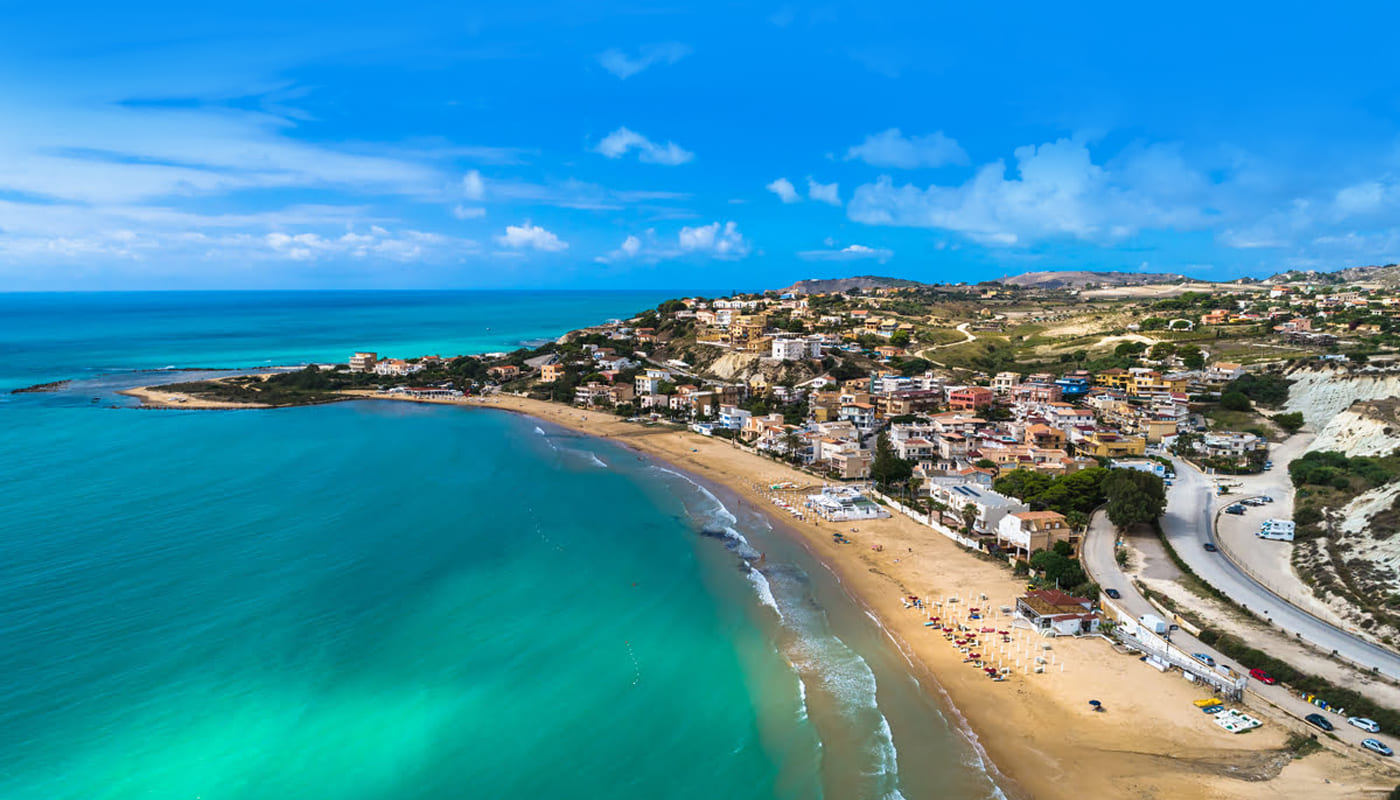
Porto Empedocles one of the most important economic entities in the province of Agrigento, liaises with the Pelagie Islands. Since 2003, the town is also known by the name Vigata, a tribute to the fictional country of the literary character Salvo Montalbano, created by local writer Andrea Camilleri. Porto Empedocles was also one of the ports where 9 July 1943 began the offensive of the Anglo-American troops.
Stage 2: The Temples of Agrigento
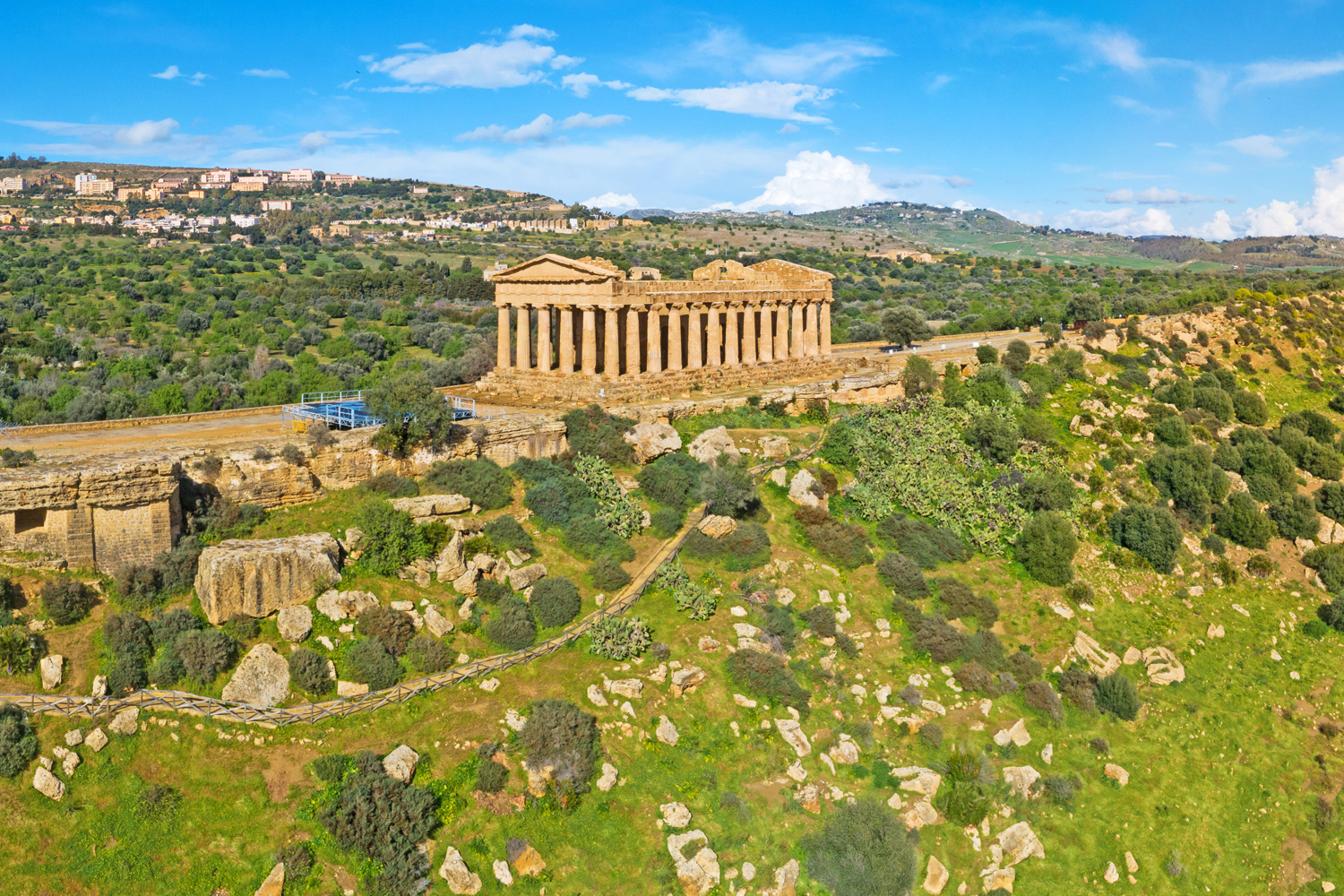
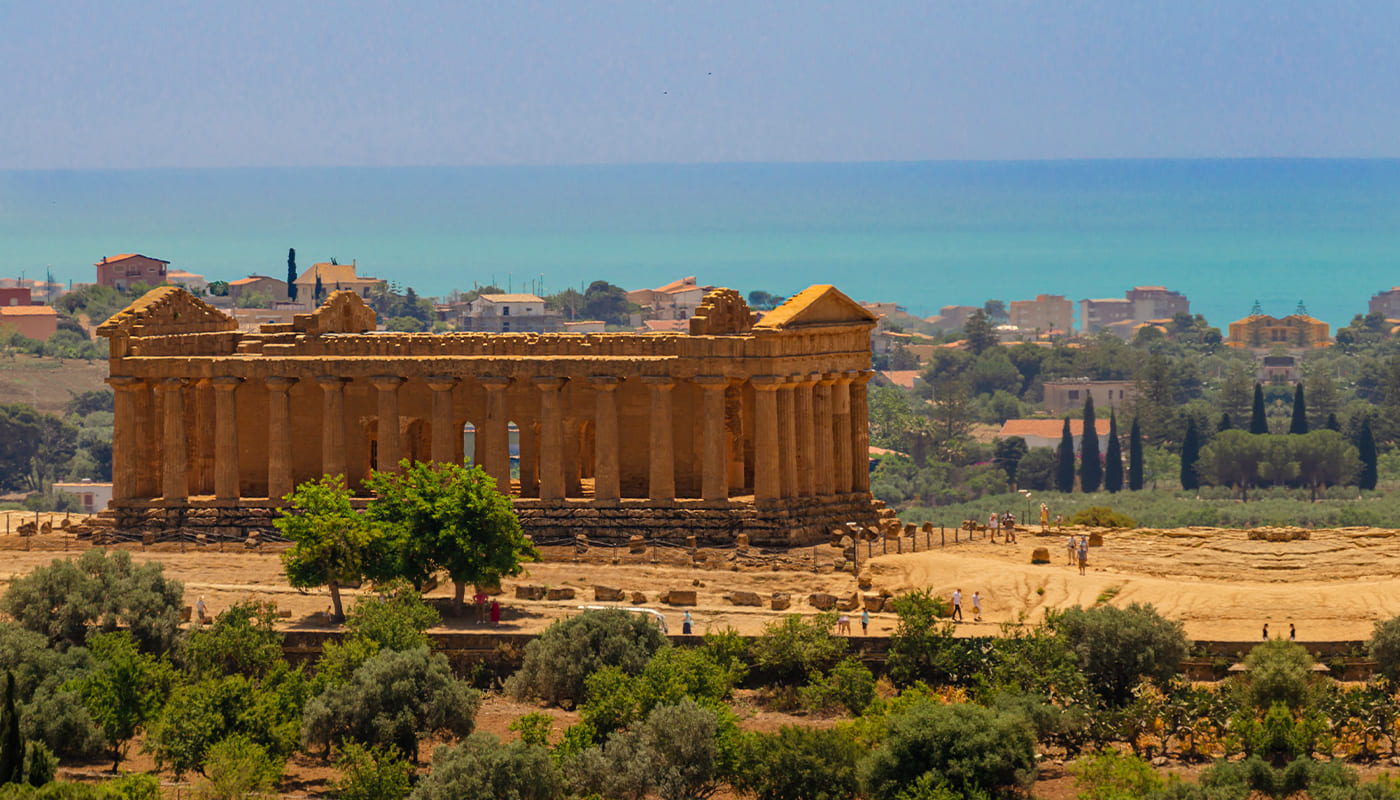
The Valley of the Temples is an archaeological site in Sicily characterized by the exceptional state of preservation and a series of important Doric temples of the Hellenistic period. Temple of Hera Lacinia, or temple of Juno, was built in the fifth century BC and burned in 406 by the Carthaginians. It was the temple which is usually celebrated the wedding. Temple of Concord, whose name derives from a Latin inscription found near the same temple, also built in the fifth century. The time now is probably the best preserved, thanks to the fact that it was transformed into a Christian church in the sixth century AD.
Stage 3: Chiaramonte Castle - Favara (AG)
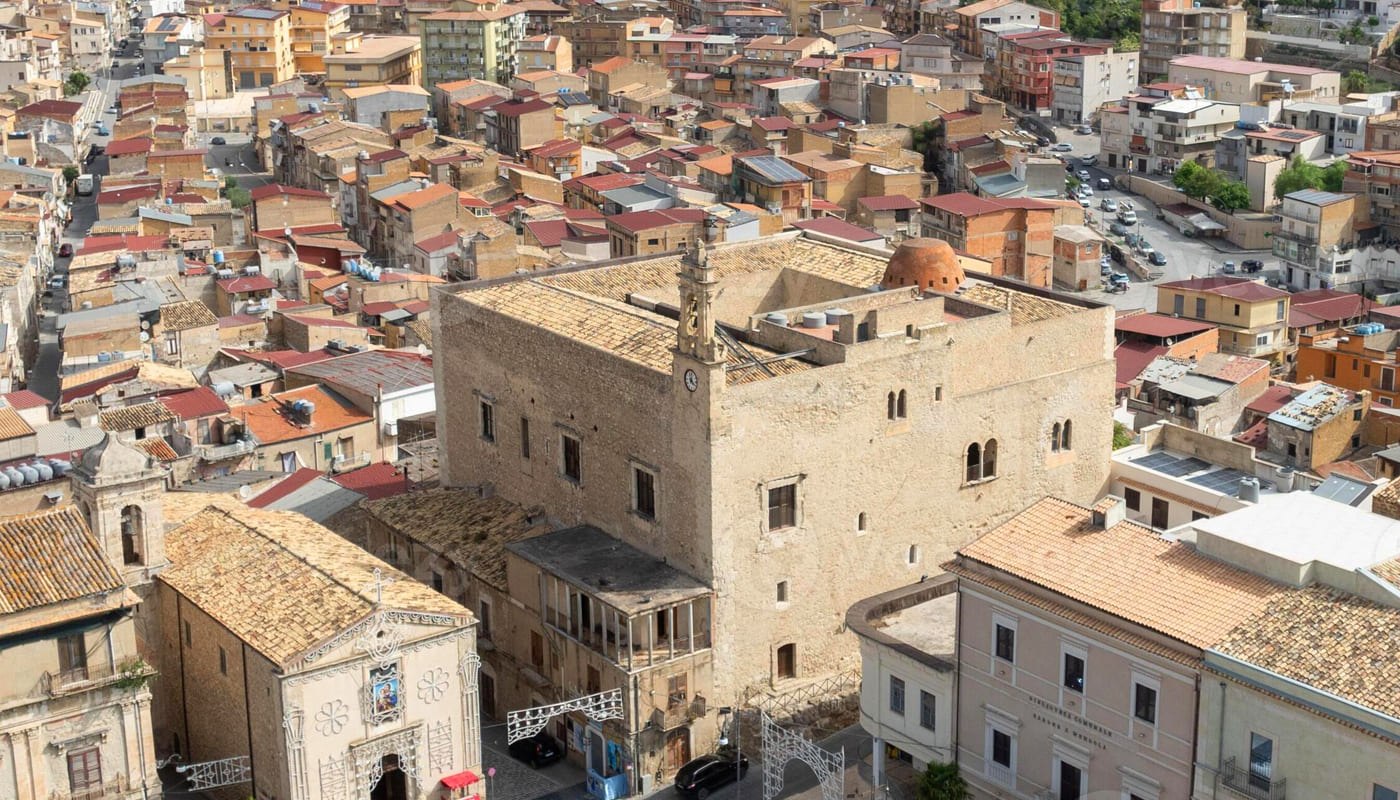
At the center of the town of Favara you can admire the Chiaramonte Castle, built by Frederick II Chiaramonte around 1280. Today it is home of the Town and is used for cultural events.
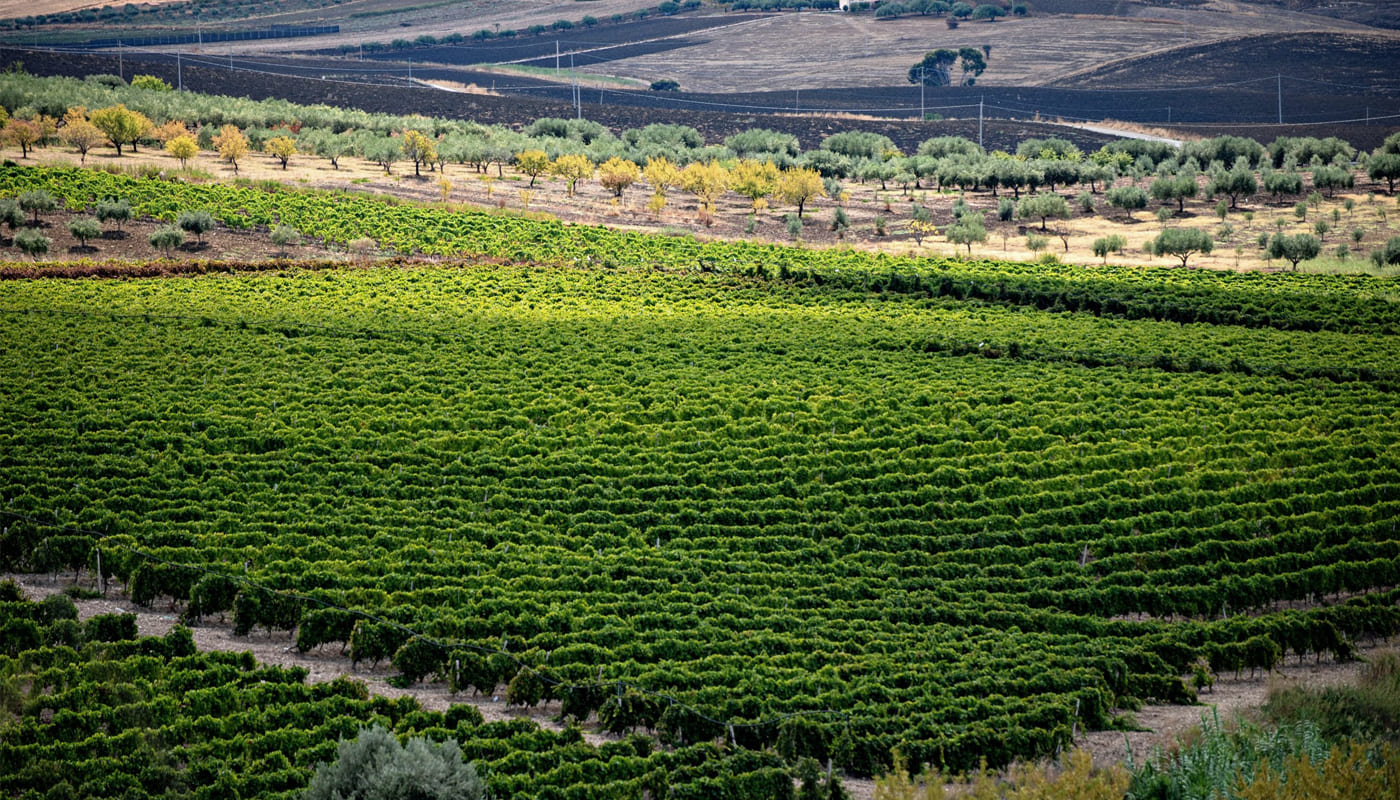
Stage 4: Italian Grapes from Canicattì
A prized grape variety produced in the Agrigento area, appreciated and recognized throughout the world, is Uva Italia di Canicattì, created by a renowned geneticist, Alberto Pirovano, by crossing two grape varieties, Bicane and Moscato d'Amburgo. The grapes obtained from this cross are attractive, large-sized, and very hardy.
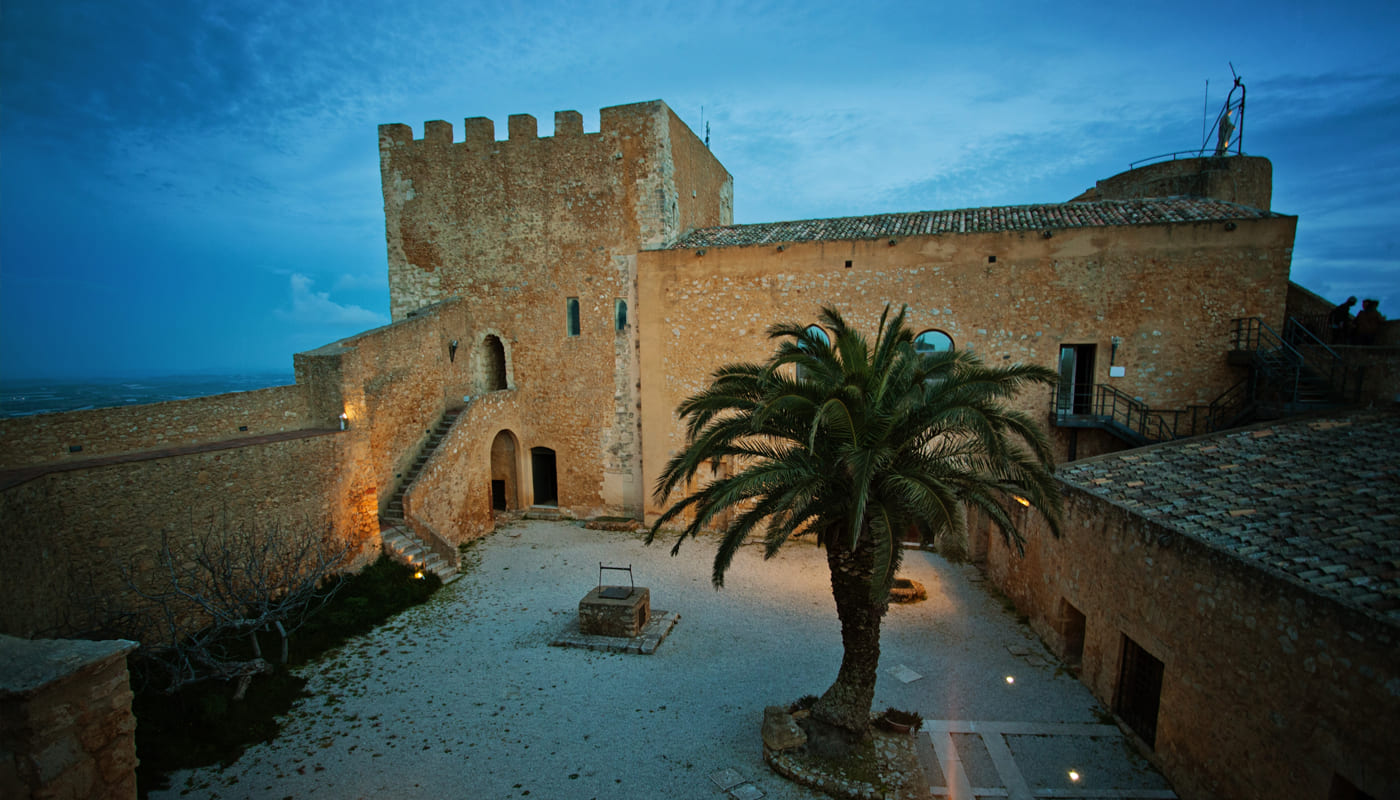
Stage 5: The Castle of Siccardi
Naro is "the castle of the Siccardi", a powerful fortress, symbolically raised to the ultimate defense against the greed of nearby communities.
Road, medium intensity, requires a basic athletic training.
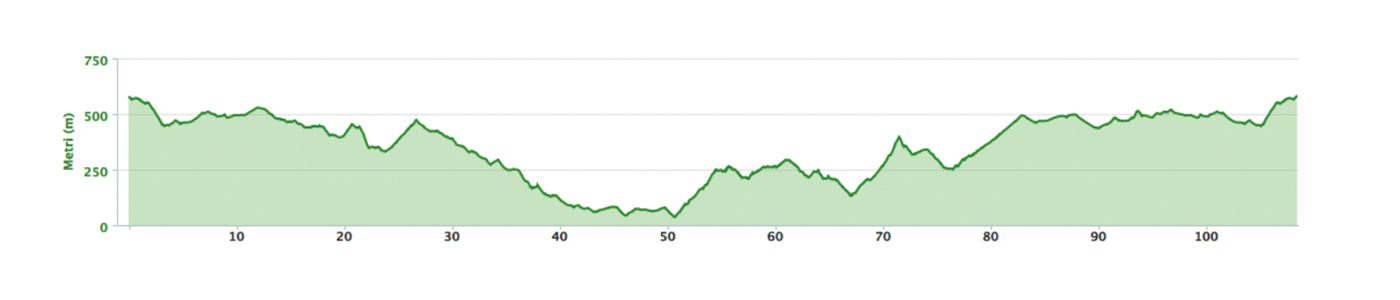
Altimetry
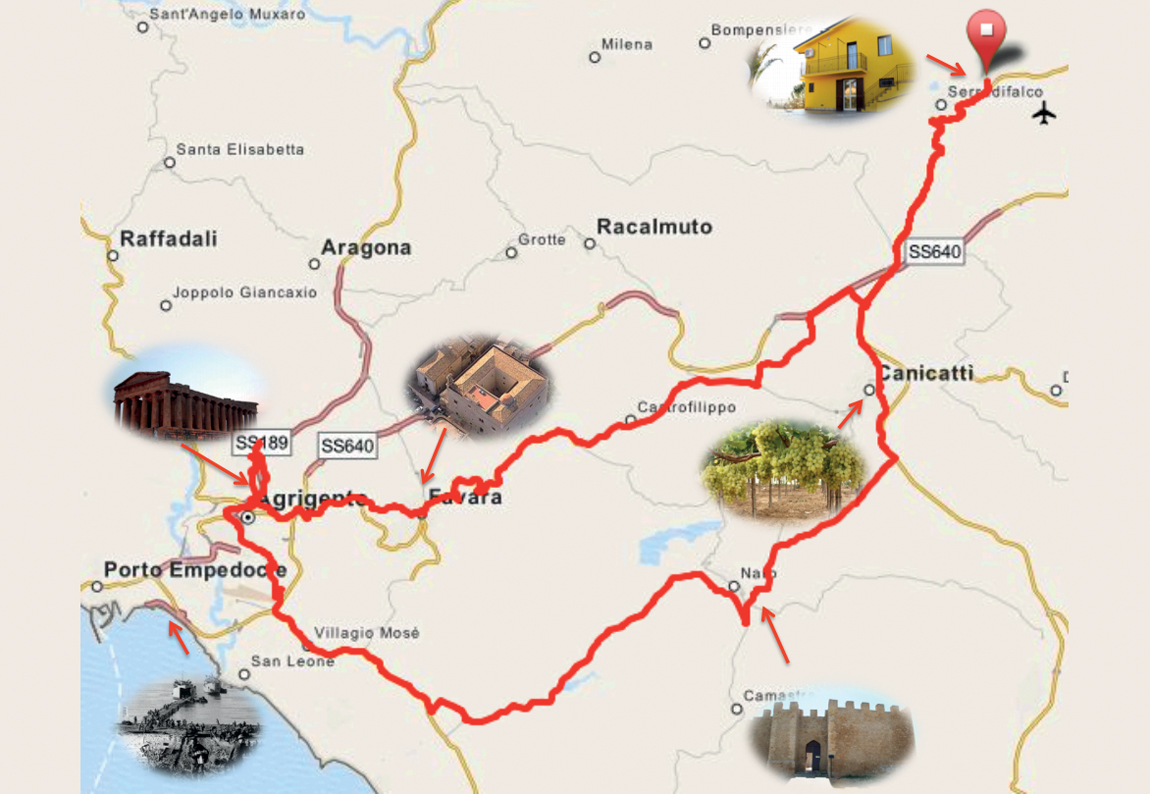
Road map